Six Sigma Training & Certification

Master the art of process improvement and quality management with our practical Six Sigma training programs

Six Sigma Overview

Duration

5 days — flexible delivery to fit working professionals.
Content Split

Applications 80% • Theory 20% — strong emphasis on practical outcomes.

Certification Time

Certificates issued within 2–5 business days after result verification.

Pedagogy

Interactive workshops, group activities, case studies.

Training Mode

Instructor-led (onsite) & Live online cohorts available.

Sample Certification

Preview of the certificate issued on successful completion — high-resolution, verifiable and personalized with trainer signature.
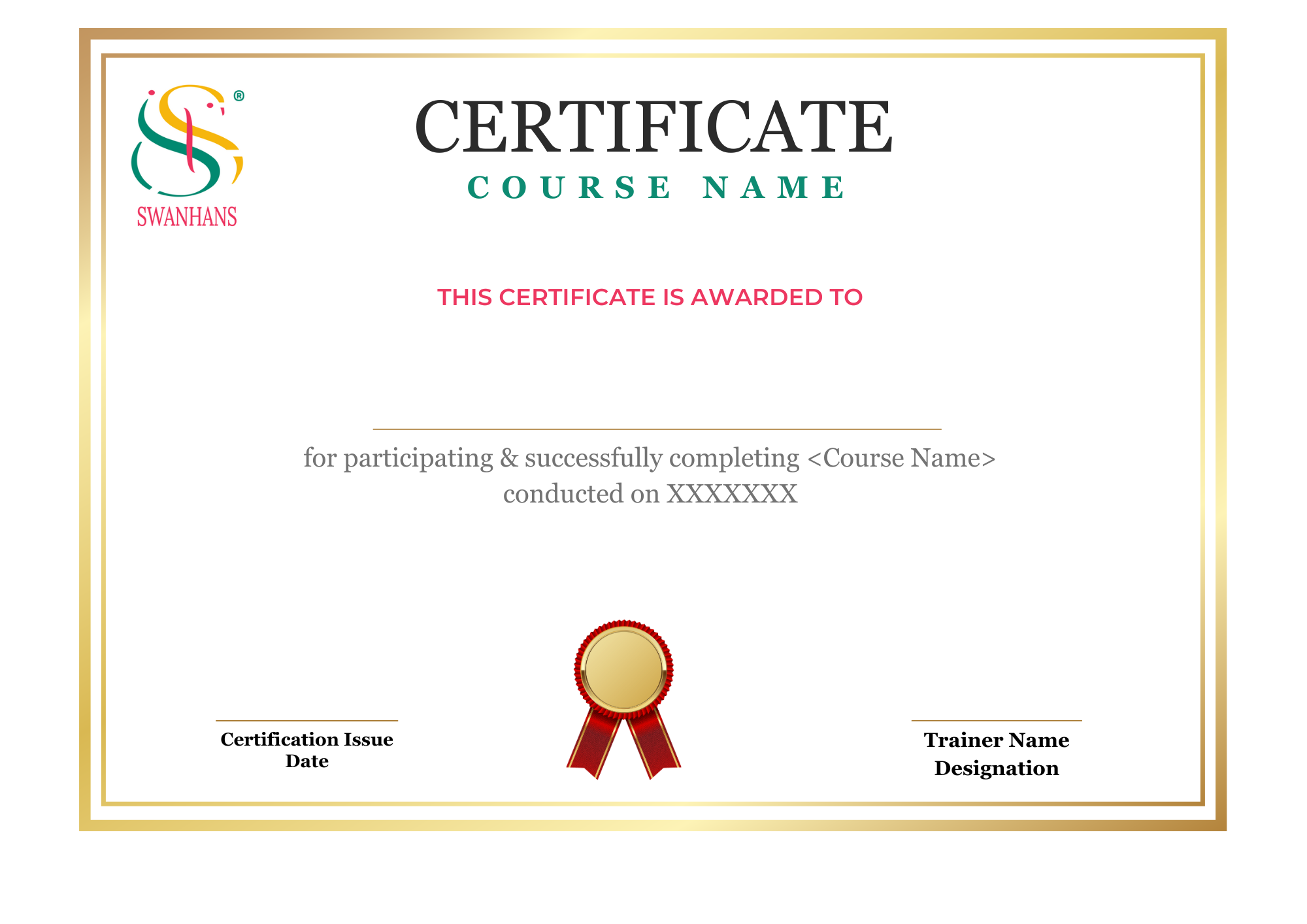
Certificate Preview

Sample Certificate - Lean Six Sigma

High-resolution, print-ready certificate issued after course completion.

Learning Modules

Practical curriculum covering Six Sigma fundamentals, Lean integration, statistics and applied tools — plus bonus modules on digitization and AI.

Core Topics

  • What Is Six Sigma?
  • Six Sigma History & Application
  • Alternative Process Improvement & Quality Methods
  • Lean Concepts
  • Basic Six Sigma Concepts
  • Approaching The Problem & Project Selection
  • Quality
  • Basic Six Sigma Team Management

Statistical & Applied Tools

  • DMAIC & DMADV
  • Lean Sigma Tool Box
  • Beginners Statistics & Distribution Functions
  • Hypothesis Testing & Sample Size
  • Afinity diagrams / KJ Model
  • kano Diagram
  • Control Charts
  • critical parameter tree
  • pareto
  • cause and effects diagram
  • why why analysis
  • Control Charts
  • Best Practices
  • Bonus: Digitization, AI & 6Sigma

Deliverables

  • Conduct process mapping and identify waste using DMAIC methodology.
  • Implement statistical analysis for root cause identification and defect reduction.
  • Deploy continuous improvement projects with measurable KPIs and cost savings. Achieved cost savings and operational efficiency through targeted projects.

Training Outcomes

  • Streamlined processes with reduced cycle times and waste.
  • Lower defect rates and improved product quality.
  • Deploy continuous improvement projects with measurable KPIs and cost savings. Achieved cost savings and operational efficiency through targeted projects.
  • Established a culture of continuous improvement across teams.

Ready to Transform Your Business?

Let's discuss how our business model can drive success for your organization.